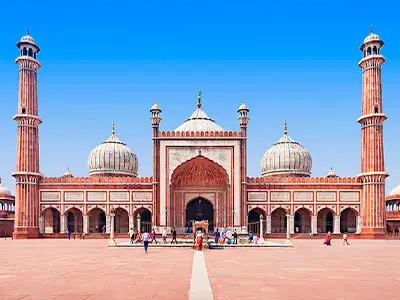

This morning in Old Delhi previously known as Shahjahanabad, take a cycle rickshaw through the chaotic, noisy and bustling markets of Chandni Chowk, where trading continues in the maze of shops as it has done over the Centuries. Stop at the magnificent Jama Masjid, the largest mosque in India and the final architectural extravagance of Shah Jehan. On route returning to the hotel stop at Rajghat, where Gandhi was cremated following his assassination in 1948. It is India’s most revered symbol of Nationalism and a sombre black granite platform inscribed with his last words.
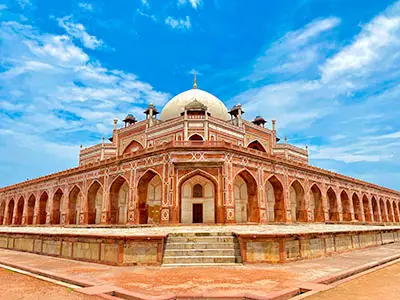
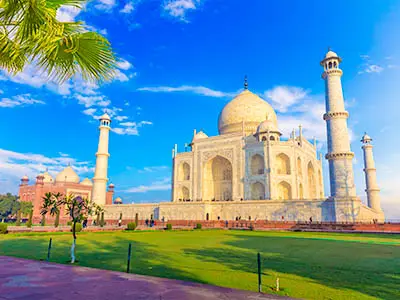
In the late afternoon visit one of the most inspirational monuments of Delhi’s past, Humayun’s Tomb. The earliest great example of a Mughal garden tomb and the forerunner to the ornate Mughal style of architecture later perfected in the Taj Mahal, Humayun’s Tomb was built in 1565 by a Persian architect. Surrounded by well maintained gardens it is a wonderfully atmospheric place to visit. Should you wish on the return journey stop at the Government Emporium, which is a 5 storey treasure trove of crafts and gifts. Accommodation at hotel in Delhi.
After breakfast Check Out the Hotel than drive to Mandawa, Check In Hotel, Overnight stay at Hotel Mandawa. Overnight in Mandawa.
After breakfast full day visit Jaisalmer , visit Jaisalmer fort The Jaisalmer fort, known as Sonar Quila or the Golden fort, rises from the sand and merges with the golden hues of the desert ambience. The setting sun in its most colourful shades gives it a fairy tale appearance. It is simply magical – as the bastions envelop a whole township that consists of the palace complex, the intricately carved havelis of rich merchants, several temples and the residential complexes of the armies and traders placed strategically on the trade route.
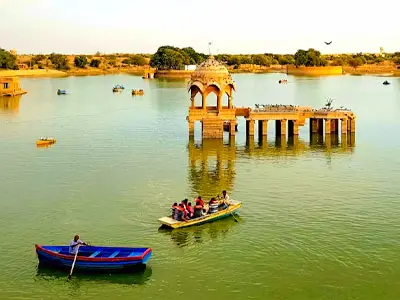
Gadisar Lake-This is a rain water conservation lake built by Maharawal Gadsi in 14th century.
Patwan Ki Haveli – A group of apartments, this is one of the largest and most elaborate of Havelis in Jaisalmer and stands in a narrow lane. It is five storeys high and is extensively carved. A part of this beautiful building is owned by the Department of Archaeology and Museum. Overnight stay at Hotel Jaisalmer.
After breakfast drive to Jodhpur and imperial city located at the edge of the Thar Desert echoes with tales of antiquity in the depletion of the desert. You will be passing through the desert enchantments in way as you approach Jodhpur. A typical rural Rajasthan view, women in their colourful long skirts with men wearing different colour turbans. Jodhpur city at the edge of the Thar Desert was once the capital of the Marwar state. It was founded in 1459 A.D. by Rao Jodha-chief of the Rathore clan of Rajput. In Jodhpur; the genius of its sculptors comes to life in its exquisite palaces, forts, temples and Havelis, which stand as a testimony to the imperial grandeur, upon arrival check into hotel. Rest of the time at leisure. Overnight in Jodhpur
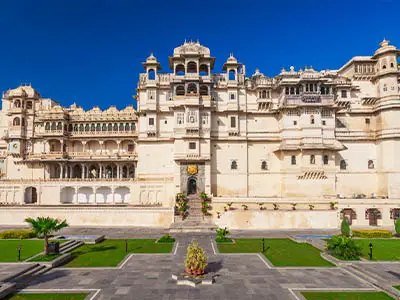
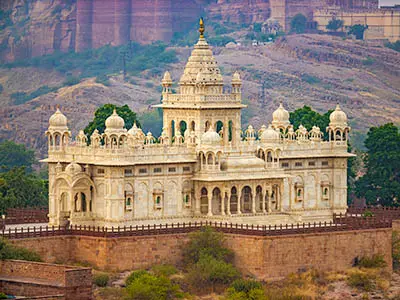
Today Morning proceed for half day city tour of Jodhpur to visit Mehrangarh Fort and Jaswant Thada. After sight-seeing drive to Udaipur. En route stop at Ranakpur. The place is a great Jain pilgrimage center carved out of marble. The temples are quire famous for their intricate carving. The main shrine of Adinath, with its 1444 columns, wills certainly leave you wonder struck. Also see the sun temple and the other temples in the campus. By late evening you reach Udaipur and check in at your hotel. Overnight in Udaipur.
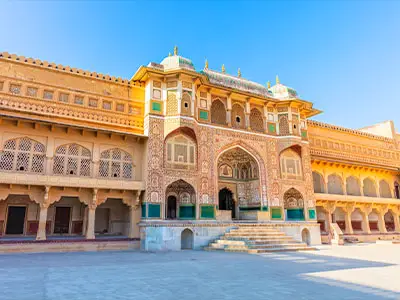
Today is a full days sightseeing in and around Jaipur beginning with Amber, the ancient capital of the region prior to Jaipur, and located 11 km north of the City. Now a deserted complex crowning the crest of a hill with panoramic views, Amber Fort is extremely well preserved and a fascinating place to explore. The forts majestic ramparts follow the natural contours of the ridge and he palace is full of hidden gems – the Sheesh Mahal (Palace of mirrors), Jas Mandir with its latticed windows and glass inlay work and Zenana. (women’s quarters) Elephants still carry visitors in stately splendor to the main Palace, through magnificent high gateways.
In the afternoon in Jaipur city, visit the opulent Maharaja’s City Palace which occupies the heart of Jai Singh II’s city and has been home to the City’s rulers for 200 years. A superb blend of Rajput and Mughal architecture, the interiors of the Palace are lavishly furnished and decorated and the Museum houses a fabulous collection of textiles, art and crafts and arms. The Jantar Mantar or Observatory was built by Jai Singh II, a keen astronomer, in 1728. It resembles a collection of giant sculptures and was used to determine the position of the stars and planets, accurately calculate Jaipur’s time, make horoscopes and is today still used to forecast the expected arrival date and intensity of the monsoon and Summer temperatures. Accommodation at hotel in Jaipur.